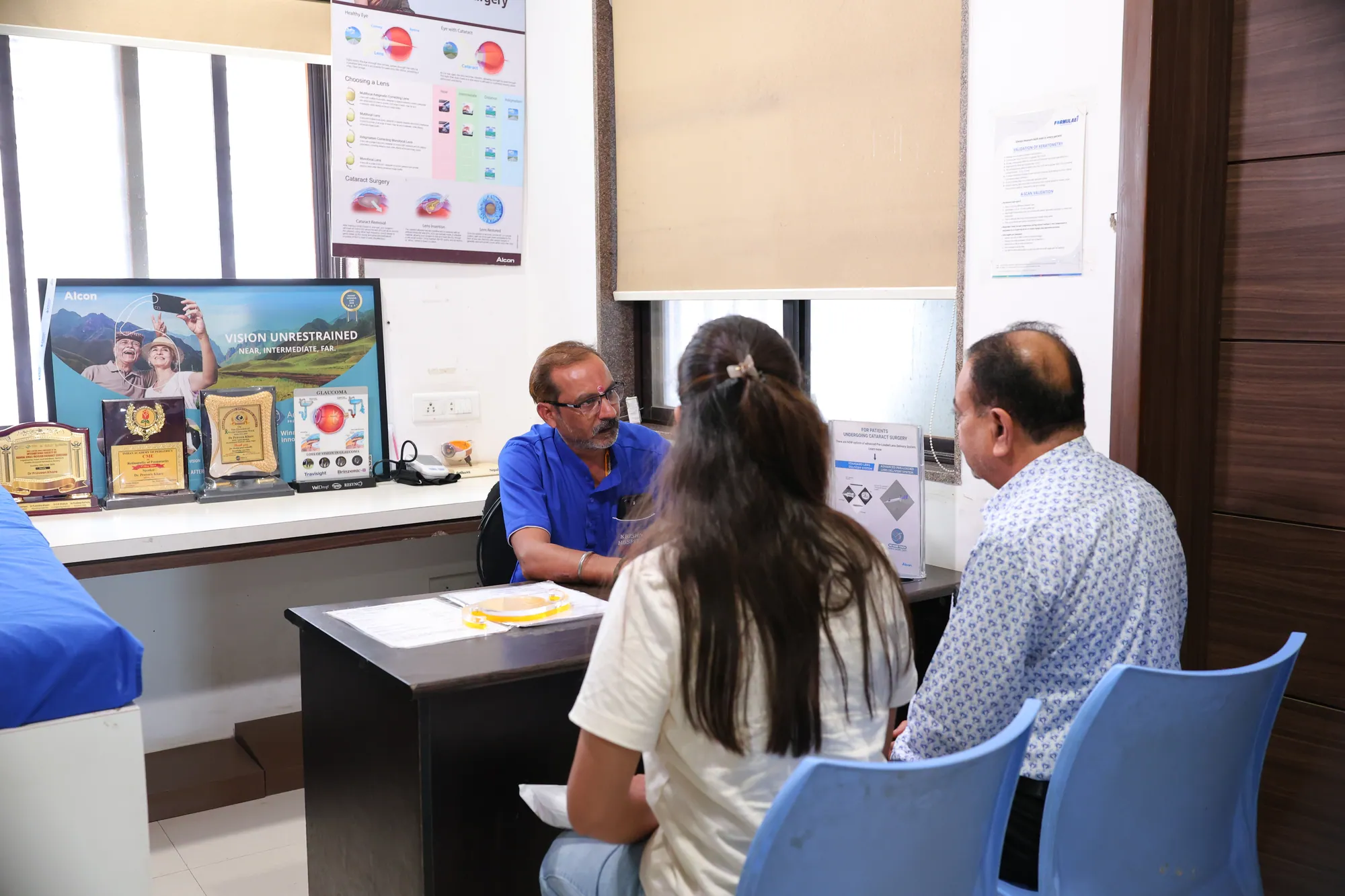
Glaucoma is a group of eye conditions that can damage the optic nerve, which carries visual information from the eye to the brain. The damage often progresses slowly and may not cause noticeable symptoms at the beginning. Eye pressure is an important part of assessment, but a pressure reading by itself cannot confirm or exclude glaucoma. A clinician considers the optic nerve, visual function, measurements and the person’s history together. This is why a proper examination matters even when vision seems clear.
Krishna Hospital’s glaucoma service information is intended to help patients understand the consultation and prepare questions. It does not diagnose glaucoma online or replace an examination. If glaucoma is suspected, the ophthalmologist explains what has been observed, which tests may help, and how often review is needed. Some patients are monitored; others may be advised drops, laser or surgery depending on the findings. The choice should be individual, explained without pressure and followed by ongoing review.
What glaucoma means for the eye
The optic nerve is made of many nerve fibres. In glaucoma, characteristic damage to these fibres can lead to loss of parts of the visual field. The change may be subtle and peripheral before it affects central vision, so a person might not notice it while reading or looking straight ahead. Different forms of glaucoma behave differently. Some are associated with raised eye pressure; others can occur with pressures that are not unusually high. The diagnosis and monitoring plan therefore involve more than one number or one visit.
Family history, age, previous eye findings and overall health may affect a clinician’s level of concern. These factors do not prove that someone has glaucoma, and having no family history does not rule it out. If a parent, sibling or another close relative has glaucoma, mention it at the consultation. Bring earlier eye-pressure readings, visual-field printouts and OCT reports if available. Comparing reliable measurements over time may help the clinician understand whether a finding is stable or changing.
Why a check can be useful before symptoms appear
Early glaucoma commonly has no obvious warning sign. Some people only recognise a problem after peripheral vision has changed, which is one reason routine examinations may be important for people with risk factors or previous abnormal findings. A standard glasses check is not always the same as a glaucoma assessment. Tell the eye specialist whether you have been diagnosed before, use prescribed eye drops, have missed reviews or have noticed any change in seeing around the edges.
A sudden painful red eye with blurred vision, coloured rings around lights, headache, nausea or vomiting can be an emergency and should be assessed promptly. Not every person with these symptoms has acute glaucoma, but severe sudden symptoms need urgent medical attention rather than a routine appointment. Do not use another person’s eye drops or wait for a website reply. For gradual concerns, request an appointment and explain the history. Only an in-person examination can determine what is happening and which timeframe is safe.
What a glaucoma assessment may include
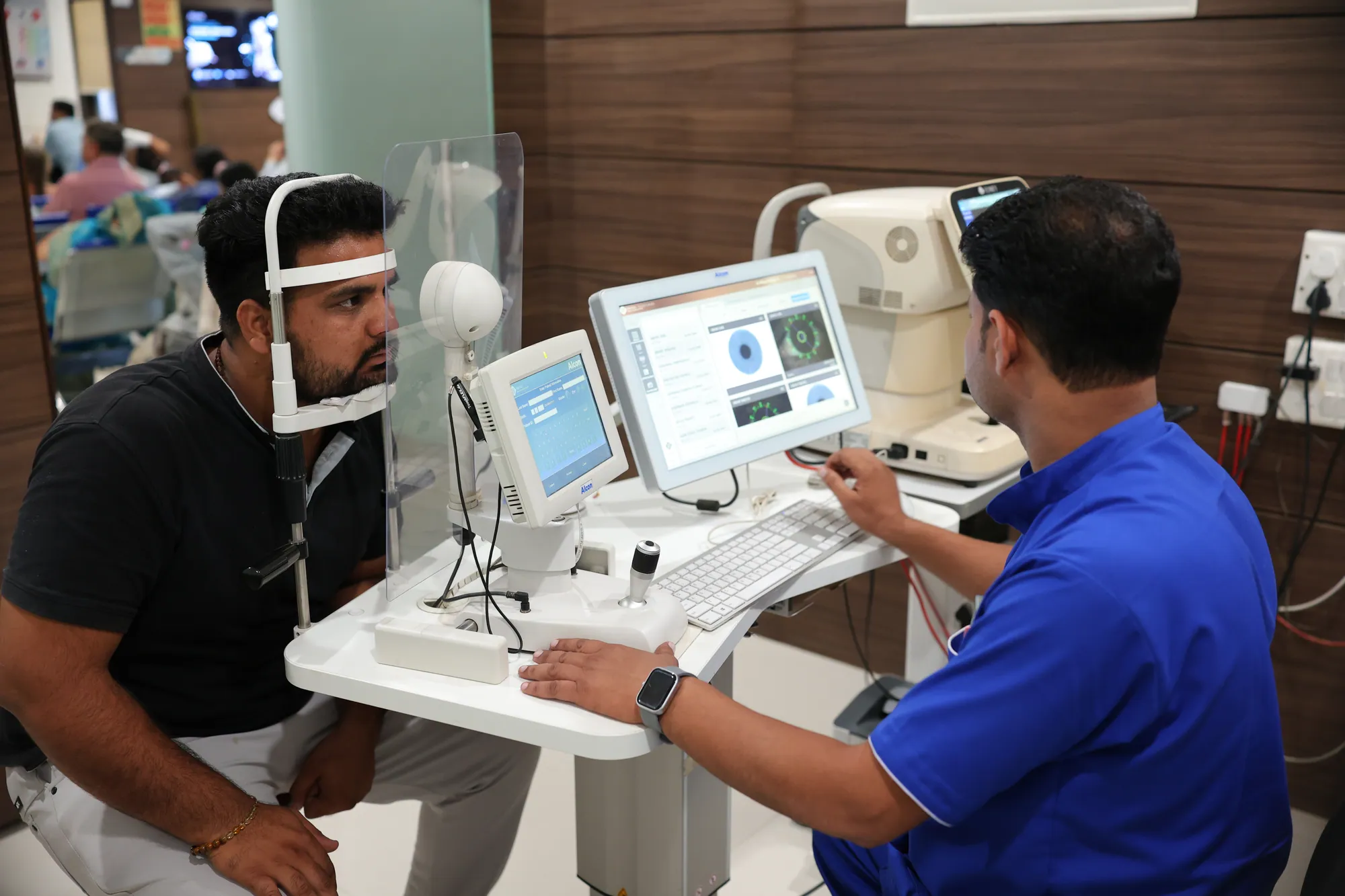
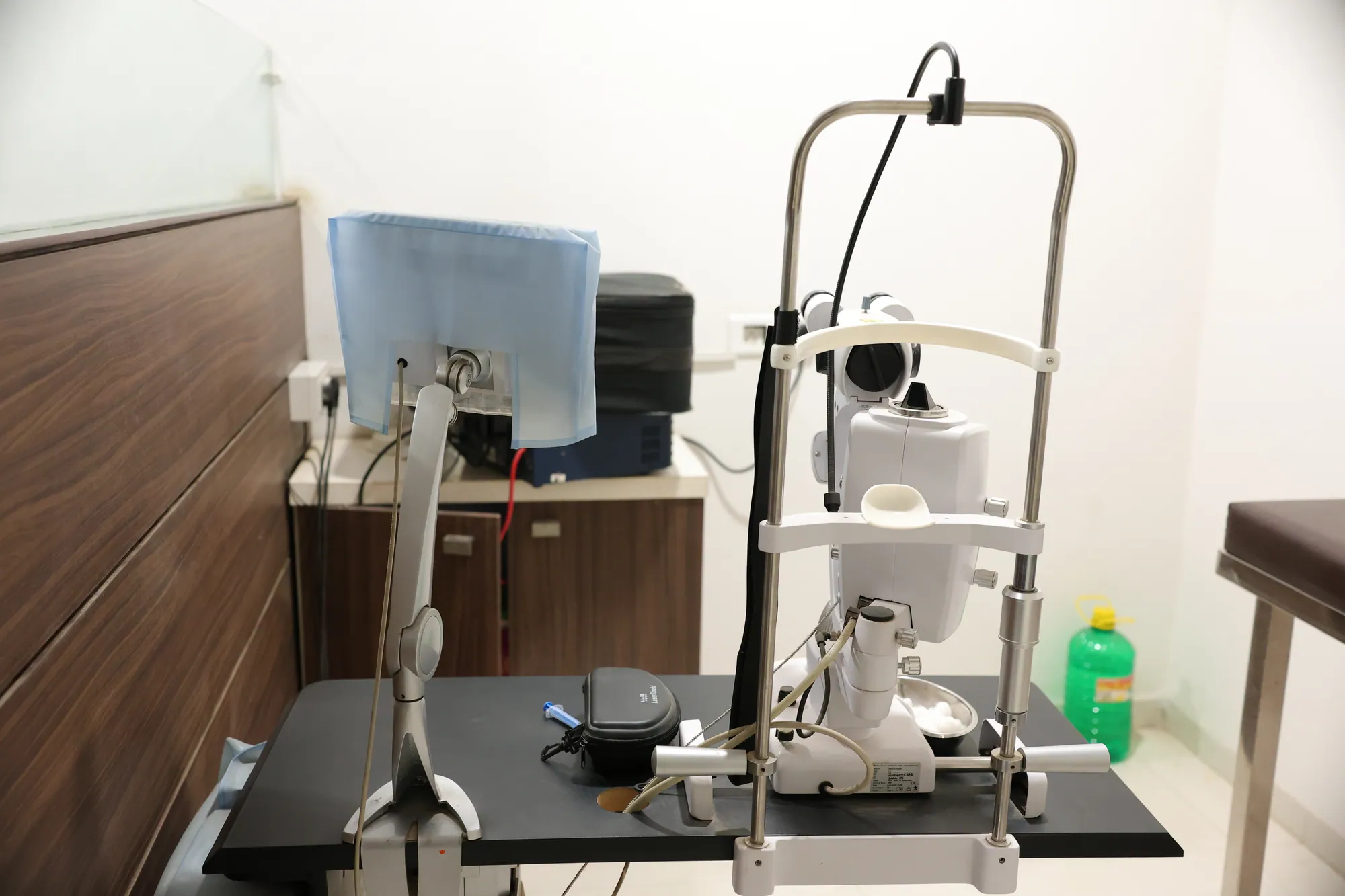
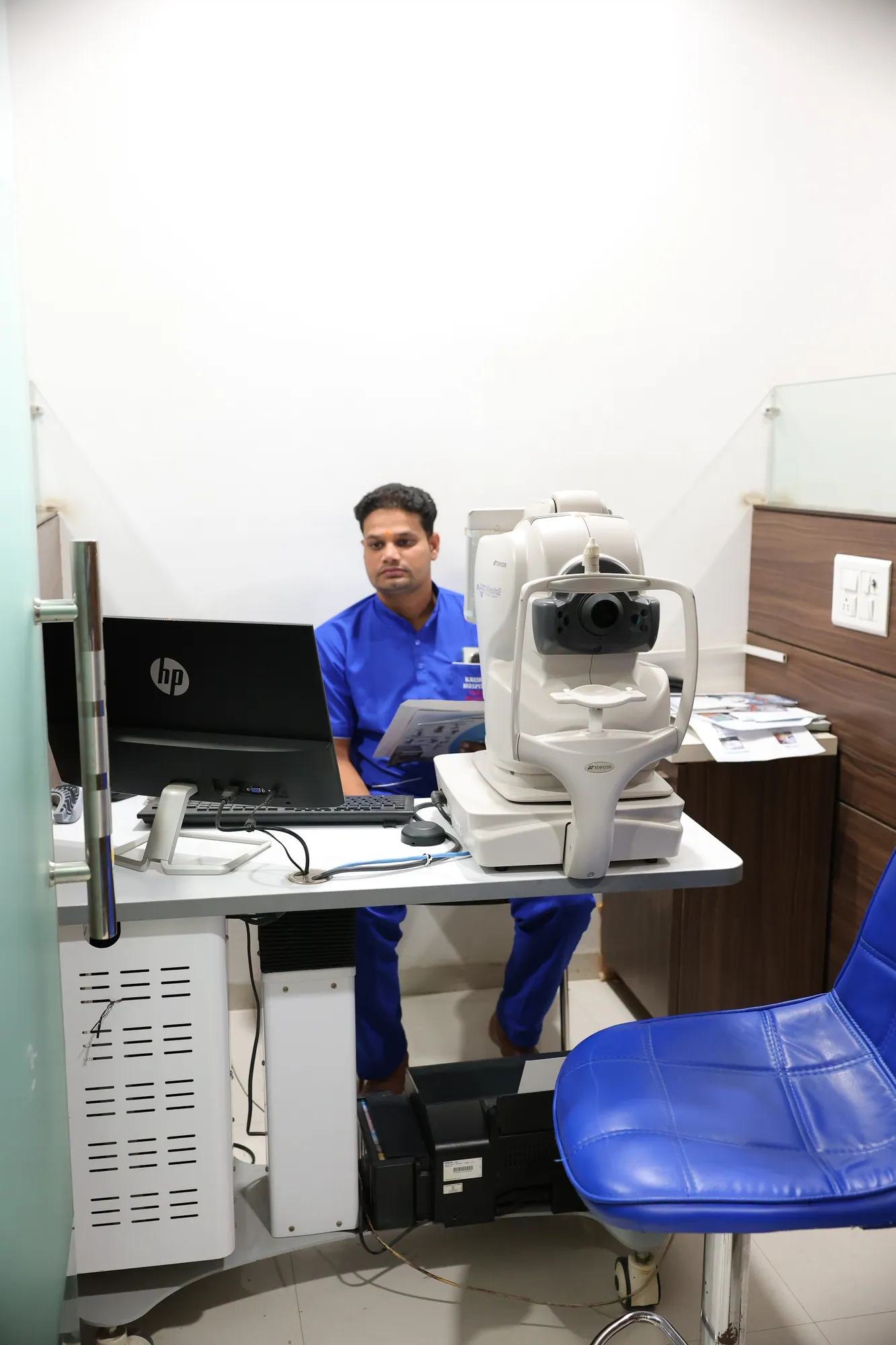
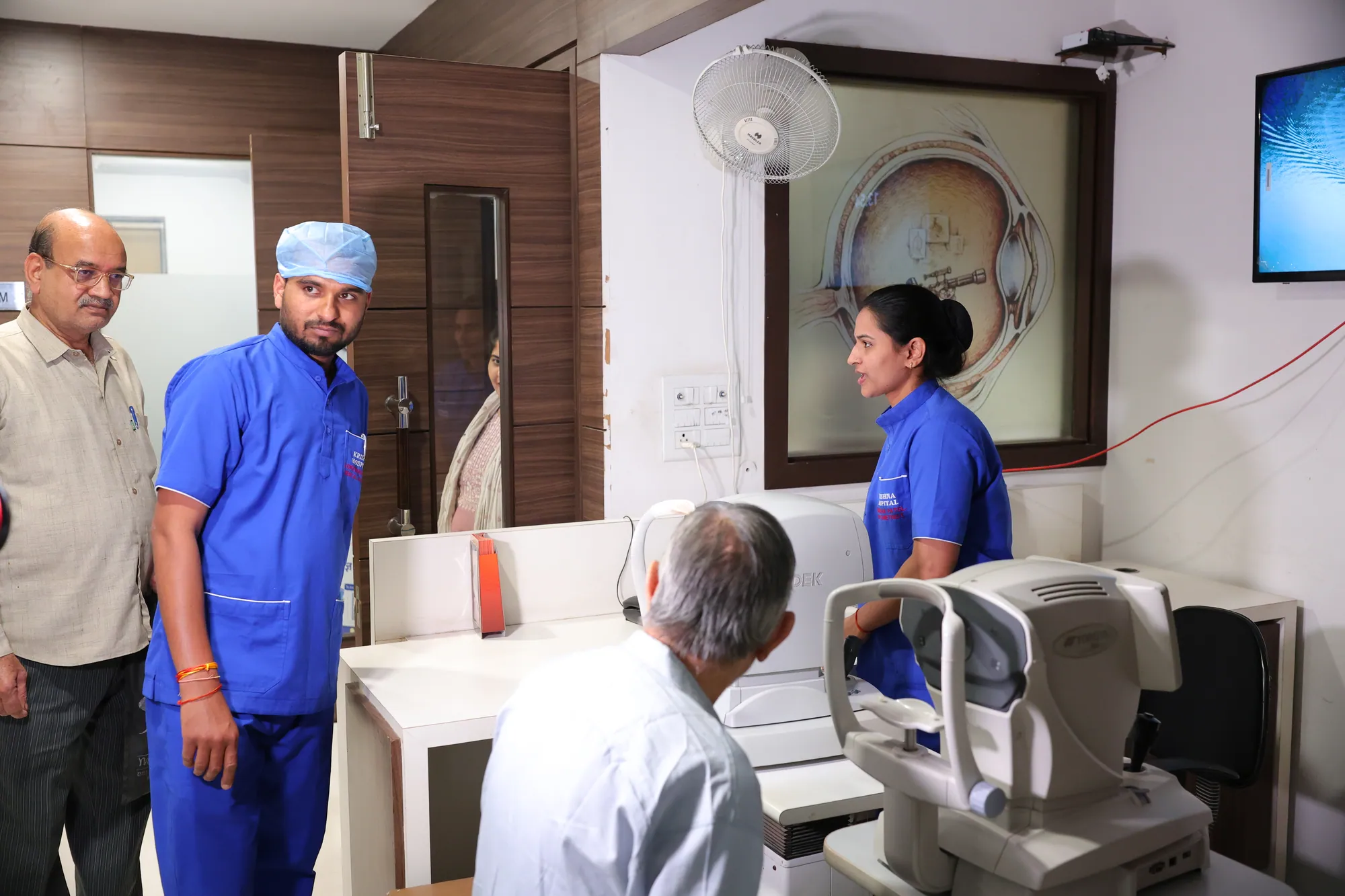
The clinician may ask about vision, previous eye treatment, family history, medicines, general health and the timing of earlier findings. An examination may include visual acuity, measurement of eye pressure, inspection of the optic nerve and assessment of the drainage angle or cornea where appropriate. Some people need imaging such as OCT or a visual-field test; others may need a different combination. The treating clinician chooses tests based on the question being answered. A test in the price list is not a recommendation for every patient.
Visual-field testing maps how well a person sees in different parts of the field while looking at a fixed target. OCT can create images of structures around the optic nerve and retina. Neither test should be interpreted alone or compared casually with an online result. Ask whether dilation is planned, whether drops could temporarily affect close-up vision, how long a test may take, and when the findings will be discussed. If you have difficulty keeping your head still or understanding the equipment, let staff know so they can guide you.
Monitoring and treatment conversations
When treatment is recommended, the aim and the limits should be clear. Eye drops may be prescribed to help control pressure; they need to be used exactly as directed and reviewed. Laser may be considered for selected indications, including a YAG peripheral iridotomy when a clinician determines it is suitable. Surgery such as trabeculectomy may be discussed when the specialist believes it is appropriate. The chart supplied by the hospital lists trabeculectomy rates, but the listing does not establish which procedure any patient needs or what each amount includes.
Glaucoma care is usually about protecting remaining vision and reducing the risk of further damage; it cannot promise that lost nerve function will return. The specialist should explain the expected benefit, possible complications, alternatives, the timing and what follow-up involves. If medicines are prescribed, ask how to apply them, how to handle a missed dose and what to do if irritation occurs. Do not stop a drop because symptoms improve or because you feel well. Confirm changes with the clinician who knows your eye findings.
Why follow-up remains important
Monitoring intervals vary. A person with a stable finding may need a different schedule from someone with new changes, a pressure concern or recent treatment. Keep appointments even if vision feels normal; glaucoma may not cause a clear day-to-day signal. Bring the drops you use or a written medicine list, and tell the specialist if cost, side effects or the number of medicines makes the plan difficult. Discussing barriers early helps the team consider safe next steps rather than leaving treatment inconsistent.
At each visit, ask what is being compared with earlier results and whether the plan has changed. Request a copy of important reports if you see more than one eye-care provider. If you move, travel or will be away, ask how to arrange continuity. Family members can help remember instructions, but decisions should remain based on the patient’s examination and preferences. A good follow-up plan states the next review date, which tests are expected and whom to contact if a symptom changes before then.
How to prepare for your glaucoma appointment
Bring previous prescriptions, pressure records, visual-field or OCT reports, operation notes and a list of all medicines, including eye drops. Note the name, schedule and the last time you used each prescribed drop if you can. Tell the clinician about allergies, other health conditions and any difficulty using the drops. If a family member has glaucoma, share that history. Write down questions about diagnosis, pressure targets, treatment alternatives, how often testing is needed and what the fee covers.
Some tests involve bright lights, a chin rest or repeated responses; staff can explain the steps before they begin. Dilation can make near vision blurry or increase light sensitivity for a while, so ask whether it is planned and consider a companion if you need help travelling. Do not alter a medicine or fast unless the hospital tells you to. If the appointment follows sudden severe pain, redness, vomiting or a major vision change, tell the staff immediately rather than waiting quietly in a routine queue.
Costs, choices and informed consent
The supplied chart lists a YAG laser peripheral iridotomy amount per eye and for both eyes, as well as a trabeculectomy rate. Prices can change and a chart may not state medicines, consultation, investigations, facility charges or anaesthesia. Ask for a current written estimate for the exact procedure and eye, and confirm what is included and whether the proposed plan is clinically suitable. A lower amount or shorter procedure is not automatically the better choice; appropriateness and safety come first.
Before consenting, ask the clinician to explain the reason for treatment, the alternative of monitoring where relevant, likely follow-up, possible complications and what may happen if treatment is delayed. You can request time to review the information or bring a support person. Seek another professional opinion if you remain uncertain and time allows. The care team should be able to explain the plan in language you understand. If you experience sudden severe eye pain, a red eye with blurred sight or rapidly worsening vision, seek prompt medical care rather than relying on this guide.
Using prescribed eye drops safely
If glaucoma drops are part of your plan, ask the clinician or pharmacist to show you how to use them. Clarify which eye receives each drop, how often it is used, how much time to leave between different drops and whether the bottle has an expiry date after opening. Wash your hands before handling a bottle and avoid touching the tip to the eye or skin. If you miss a dose, develop irritation or cannot afford a refill, ask the care team what to do rather than stopping on your own. Instructions differ among medicines, so a general internet schedule may be unsafe.
Many people find a daily routine helps them remember treatment, but the specific timing should follow the prescription. If vision, hand movement or memory makes drops difficult, tell the clinician; a family member or another practical method may help. Keep a current list of medicines, including drops from other providers, because products can interact or duplicate treatment. Store each bottle as instructed and do not share it with another person. Bring the bottles or photographs of their labels to a review so the clinician can check exactly what you are using.
Tracking changes without self-diagnosing
Write down new symptoms, the dates of visits and any change in treatment. Ask the specialist which measurements are most relevant and how they compare with earlier results. A single pressure reading can vary and does not show the whole picture. Similarly, an online visual-field image or OCT report should not be used to decide whether to change drops. If an appointment is missed, call to arrange another rather than waiting until the next calendar year. The recommended interval belongs to your clinical team and may change as findings evolve.
Tell the ophthalmologist if a new medicine was started by another clinician, if you have had a recent eye procedure or if a drop causes a problem. If you are moving or will be away for an extended period, request a copy of your records and ask how to continue care. These steps support continuity but do not replace examinations. Sudden severe symptoms remain different from routine monitoring and need urgent assessment. The goal of tracking is to make the conversation more accurate, not to ask the patient to diagnose glaucoma or adjust treatment independently.
If a relative helps manage appointments, ask the patient’s permission before sharing care information and invite them to help remember the review date. The clinical team can explain which instructions are important to carry between visits.