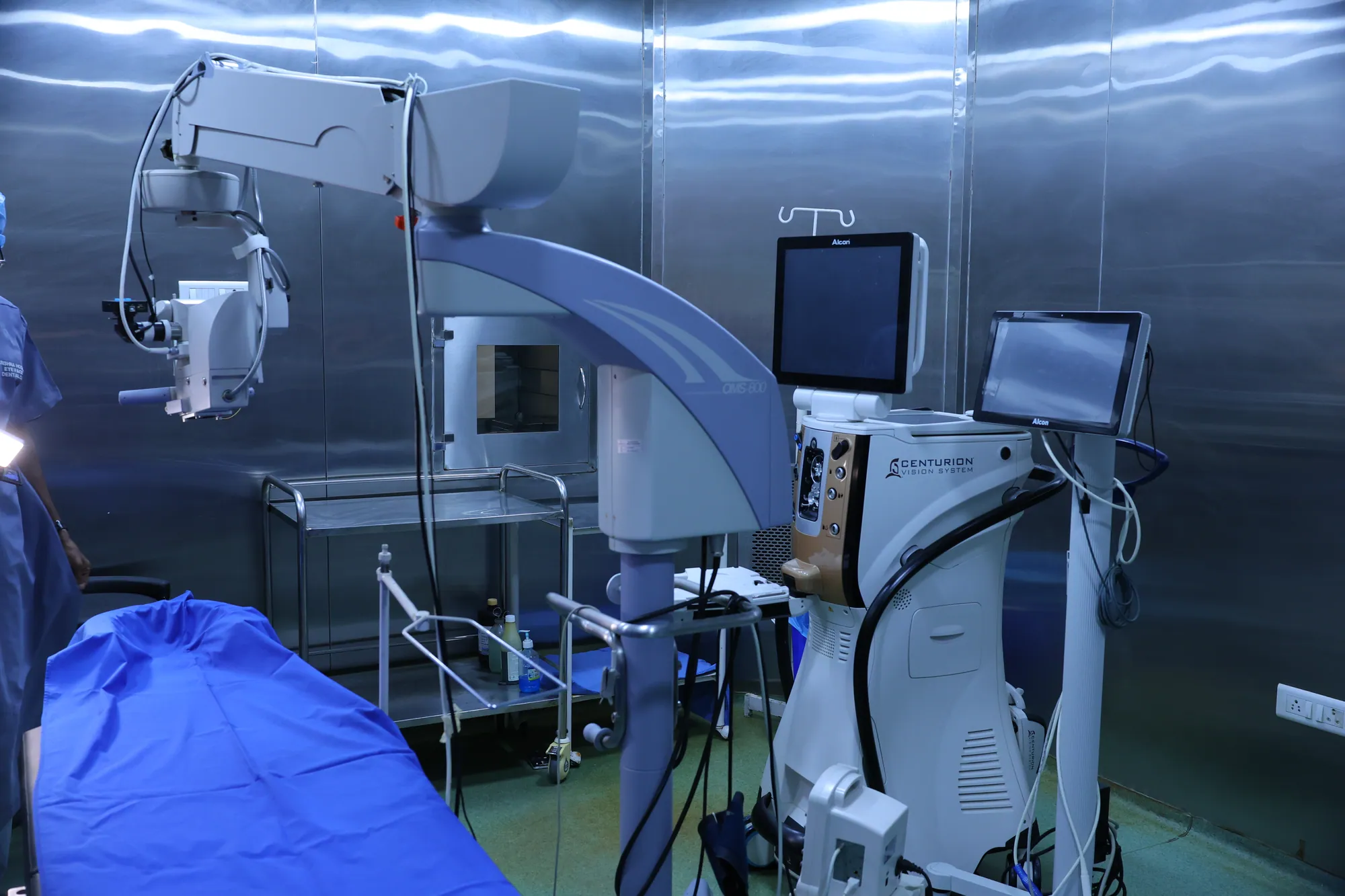
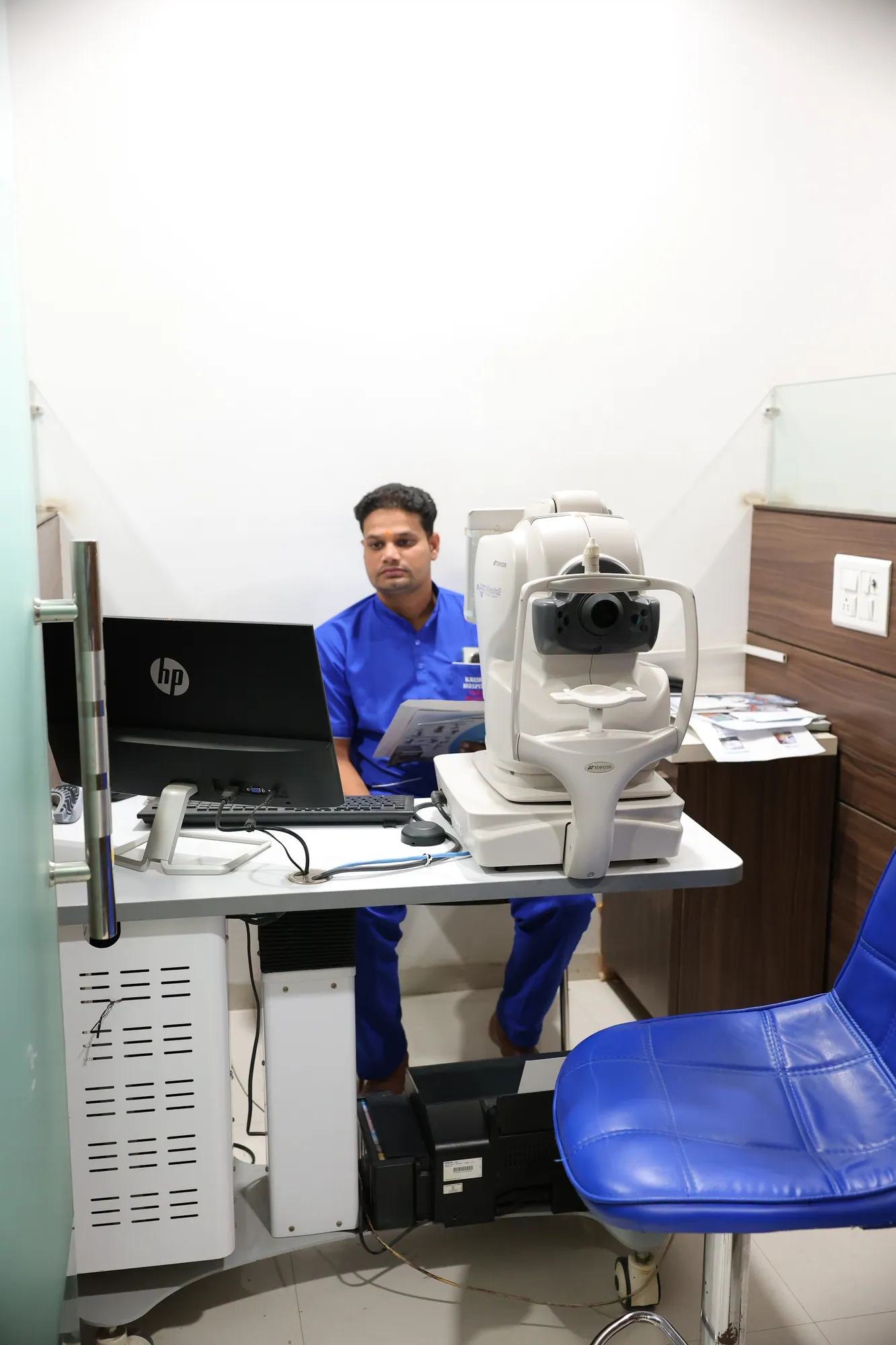
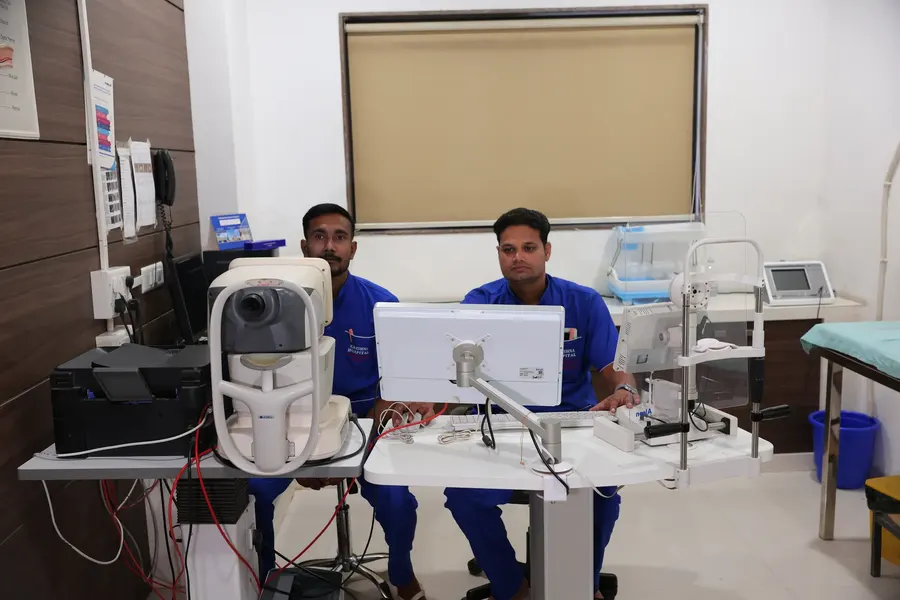
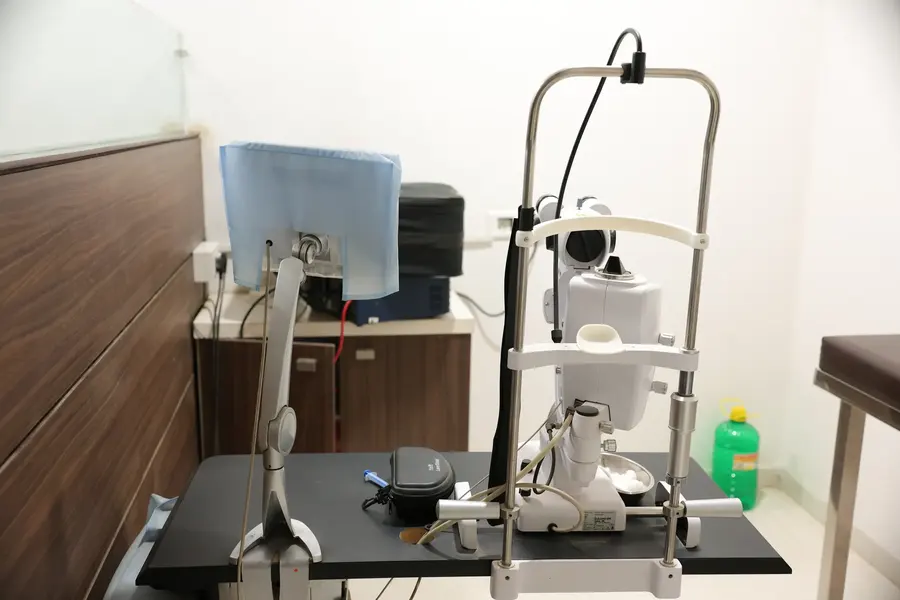
Medical retina care focuses on assessing conditions that affect the retina and macula without assuming that every patient needs an operation. A clinician may review symptoms, medical history, examination findings and imaging to understand whether a change should be watched, investigated further, treated or referred. The retina is at the back of the eye and supports central detail and peripheral vision. Changes can be subtle, so a person may not notice a problem until it affects a task. A normal-feeling eye does not replace an examination when screening or follow-up has been advised.
Krishna Hospital’s medical-retina page is a guide to the consultation, not a diagnosis or a promise of a particular treatment. The supplied chart lists OCT, OCT angiography, fundus photography and green laser rates. The clinician determines whether any of these are appropriate, explains what question a test is intended to answer, and discusses the next step after results. Some retinal conditions are managed through scheduled review or clinician-directed medical care; others may require another specialist or surgical-retina assessment. The locally available treatment and appointment details should be confirmed with the hospital.
What medical retina means
Medical retina assessment considers the retina and macula in the context of the whole eye and the person’s health. A clinician may discuss diabetic retinal changes, swelling, changes associated with blood vessels, inflammation or other findings if the examination supports them. The names of these conditions are not a diagnosis for the reader. They are examples of why a clinician may ask about diabetes, blood pressure, medicines, previous eye treatment and family history. The patient should be told what was actually observed in their own eye.
Some retinal changes can be monitored over time, while others call for timely treatment or referral. The plan depends on the location and extent of the finding, its effect on vision, the other eye and general health. The clinician should describe whether the purpose is to monitor, clarify a diagnosis, reduce risk of progression or address a specific change. Do not compare your scan or outcome with another person’s. Similar-sounding reports can mean different things depending on the examination and clinical history.
Who may benefit from a discussion
People with diabetes may be advised to have eye assessments even if they do not notice a vision change. Those with a previous retinal finding, a change in central vision, distortion, known eye disease or a doctor’s referral can ask whether a medical-retina consultation is appropriate. People who have had eye surgery or injury should share those records because they may help explain a new symptom. This page does not set a screening interval. Ask the clinician who knows your medical history how often an examination should occur.
A person can have more than one reason for reduced sight. Cataract, glasses power, corneal changes, glaucoma and retinal conditions can overlap in their effects. The clinician examines the eye to identify which structures may be involved. If you have difficulty reading, seeing fine detail, recognising faces or noticing distortion, describe the task rather than trying to self-label the condition. Sudden flashes, a sudden increase in floaters, a curtain-like shadow or sudden loss of sight is urgent and should not wait for a routine medical-retina appointment.
Imaging and investigations explained
OCT is a non-contact imaging test that creates cross-sectional views of selected eye structures. OCT angiography is a related test that can provide information about blood-flow patterns in the imaged area. Fundus photography records images of the back of the eye. A green laser is a treatment tool for specific indications, not a general diagnostic scan. The clinician may use one, several or none of these depending on the examination. A scan is interpreted with symptoms and clinical findings; it should not be treated as a complete answer by itself.
During a test, you may be asked to place your chin on a support, look at a target and remain still briefly. Some appointments include dilation, which may temporarily make close-up vision blurry or increase light sensitivity. Tell staff if you have difficulty sitting comfortably, keeping still, hearing instructions or tolerating light. Ask whether you need to arrive early, whether a companion is helpful and when the clinician will review the result. The price guide shows chart-listed investigation fees, but the hospital should confirm the current amount and any separate consultation or follow-up charge.
Retinal care and diabetes
Diabetes can affect small blood vessels in the retina. The presence, stage and effect of retinal changes can only be assessed by a qualified professional; a person’s blood-sugar readings alone do not show the state of the retina. Some people may not notice symptoms early, which is why an eye-care professional may recommend scheduled assessment. The timing of an examination should be discussed with the clinician who understands the person’s diagnosis, past findings and overall health.
Bring diabetes records and the names of medicines or other health providers involved in your care. Share whether vision has changed, whether a previous scan showed a concern and whether you have missed a recommended review. The eye-care team may ask you to coordinate with the clinician managing diabetes, but website information should not be used to alter medicines or treatment targets. If a retinal problem is found, ask what it means, what choices are available, how quickly the next step is needed and how progress will be checked. Clear coordination can help avoid missed follow-up.
How a care plan is made
A medical-retina plan starts with the actual examination result. Depending on the finding, the clinician may explain monitoring, additional imaging, medical treatment, laser for a selected indication or referral for another opinion. This page does not state that any specific medicine, injection or procedure is available for every patient. Ask the hospital to confirm which services are provided locally and whether a referral is needed. The expected benefit, limits, likely follow-up and material risks should be explained in the context of the individual eye.
For ongoing care, ask what change is being watched, how soon the next review should happen and what symptoms should prompt an earlier visit. Request a copy of your report and keep images together with previous records. If a planned treatment is offered, ask for a written estimate that names the exact service and any medicines, scans or follow-up that are separate. The amount on the chart is not a medical recommendation and does not confirm that a person qualifies for a particular treatment.
Preparing for a medical-retina visit
Bring previous eye reports, OCT or fundus images, glasses, referral notes and a current medication list. If you have diabetes, bring relevant health information if available. Write down when a symptom started, whether it is worsening and which eye feels affected. Include recent injury or surgery. If a family member helps with transport or communication, consider bringing them. Ask before the appointment whether dilation is likely; if it is, close-up vision may be blurry for a period and bright light can be uncomfortable.
Before tests begin, you can ask what each one measures, how long it may take and whether the amount is separate from the consultation. If you have difficulty looking at a target, tell the technician rather than forcing the test. The clinician can explain how results will be shared and what happens next. Do not stop any prescribed medicine or use new eye drops because of online content. Follow the instructions from your own care team. If symptoms become sudden or severe before your scheduled visit, seek prompt care rather than waiting for that date.
Urgent warning signs and follow-up
New flashes with a sudden increase in floaters, a dark curtain or shadow over part of vision, sudden loss of sight, severe pain or an eye injury needs prompt assessment. These can have several causes, but a clinician should decide how urgent the situation is. Seek same-day eye care where possible; do not depend on a web form or wait to see if the change goes away. If you cannot reach Krishna Hospital, use the nearest emergency service and take any eye records you can safely bring.
After an assessment or treatment, follow the schedule your clinician gives you. Do not cancel review because a scan seems unchanged to you; interpretation belongs to the clinical team. Contact the hospital if a symptom changes, you cannot use a prescribed treatment or the next appointment is unclear. Good medical-retina care depends on accurate testing, understandable explanations and reliable follow-up. This page can help you prepare, but the professional who examines your eye is the person who can recommend a plan.
How monitoring over time can help
Some retinal findings are reviewed at intervals rather than treated immediately. A review may compare vision, examination notes and images with earlier visits. The schedule depends on the condition and the clinician’s assessment; there is no single interval that suits every person. If you do not understand why another scan is being arranged, ask what change the clinician is looking for and how the result may affect the plan. Knowing the purpose can make it easier to attend a series of appointments and recognise the value of each one.
Keep your own record of dates, symptoms, test names and recommendations. If you are treated by several specialists, ask whether they need copies of each other’s reports. Tell the clinic if you cannot attend a scheduled review, and ask how soon it should be rearranged. Do not postpone a visit because you feel well if the clinician has asked you to return; some findings are not easy to monitor by symptoms alone. If a sudden warning sign appears, however, the planned review date no longer applies—seek prompt assessment.
Medicine questions belong in the consultation
Eye drops, tablets or other medical treatment should be used only when prescribed for you. Do not use a relative’s drops or change a dose based on a photograph, a search result or a price chart. If you have trouble following a prescription, experience a possible side effect or cannot obtain a medicine, tell the clinician. Bring the bottle or a clear image of its label to your visit. The care team can explain the intended schedule and decide whether another plan is appropriate for your findings.
Retinal care can overlap with diabetes, blood pressure, kidney health and other medical needs. Share current treatment and recent changes with the ophthalmologist, and ask if the clinician managing those conditions should receive an update. Do not independently change a chronic medicine to affect the eye. If you are pregnant, planning a pregnancy or have a significant allergy, include that information when discussing any treatment. Clear communication helps the team consider your whole health while keeping decisions anchored to an in-person examination.
If an imaging result is sent to another clinician, ask who will explain it to you and who is responsible for arranging any next appointment. A clear hand-off can prevent a report from being left without a follow-up plan.