
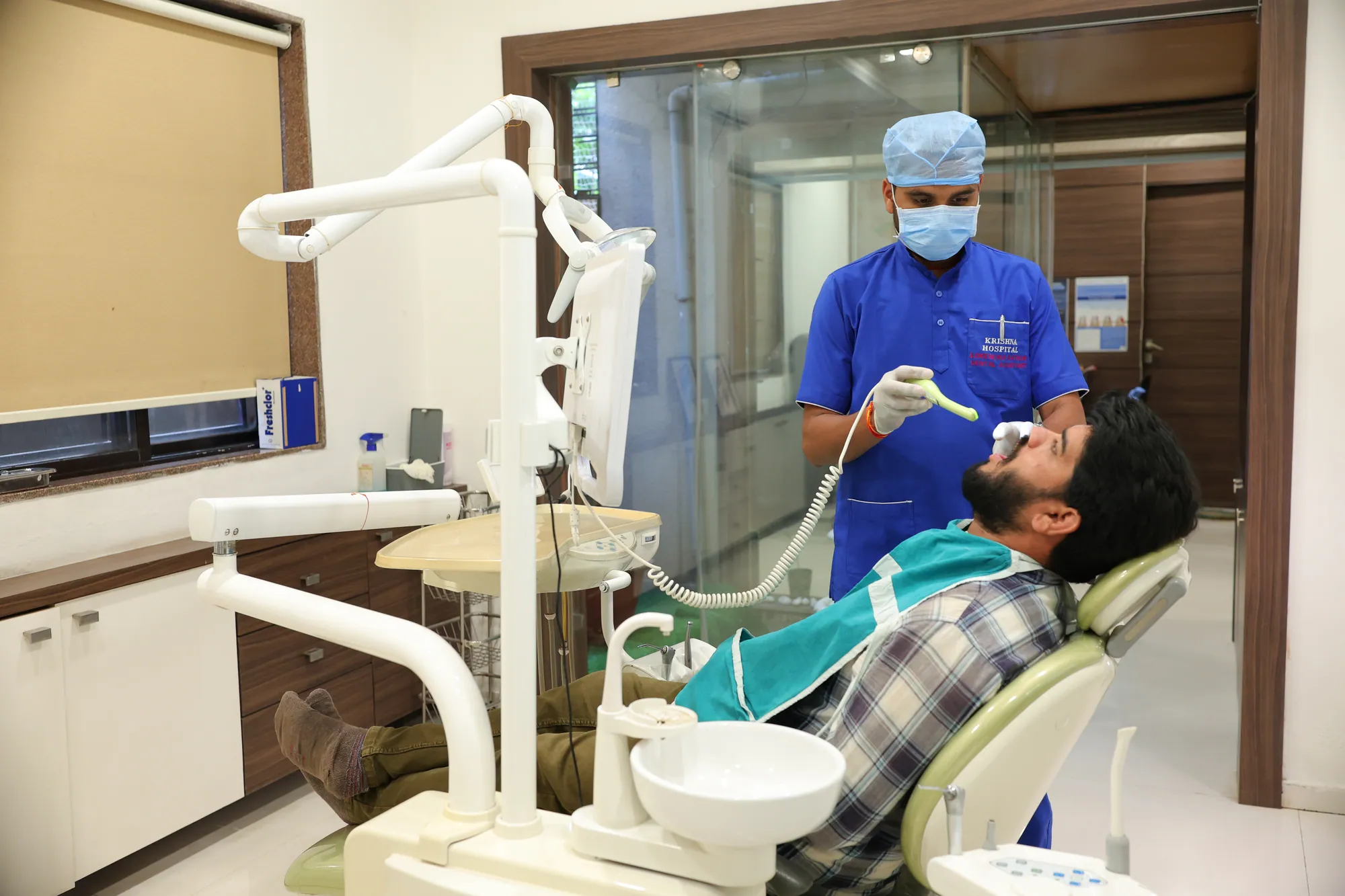
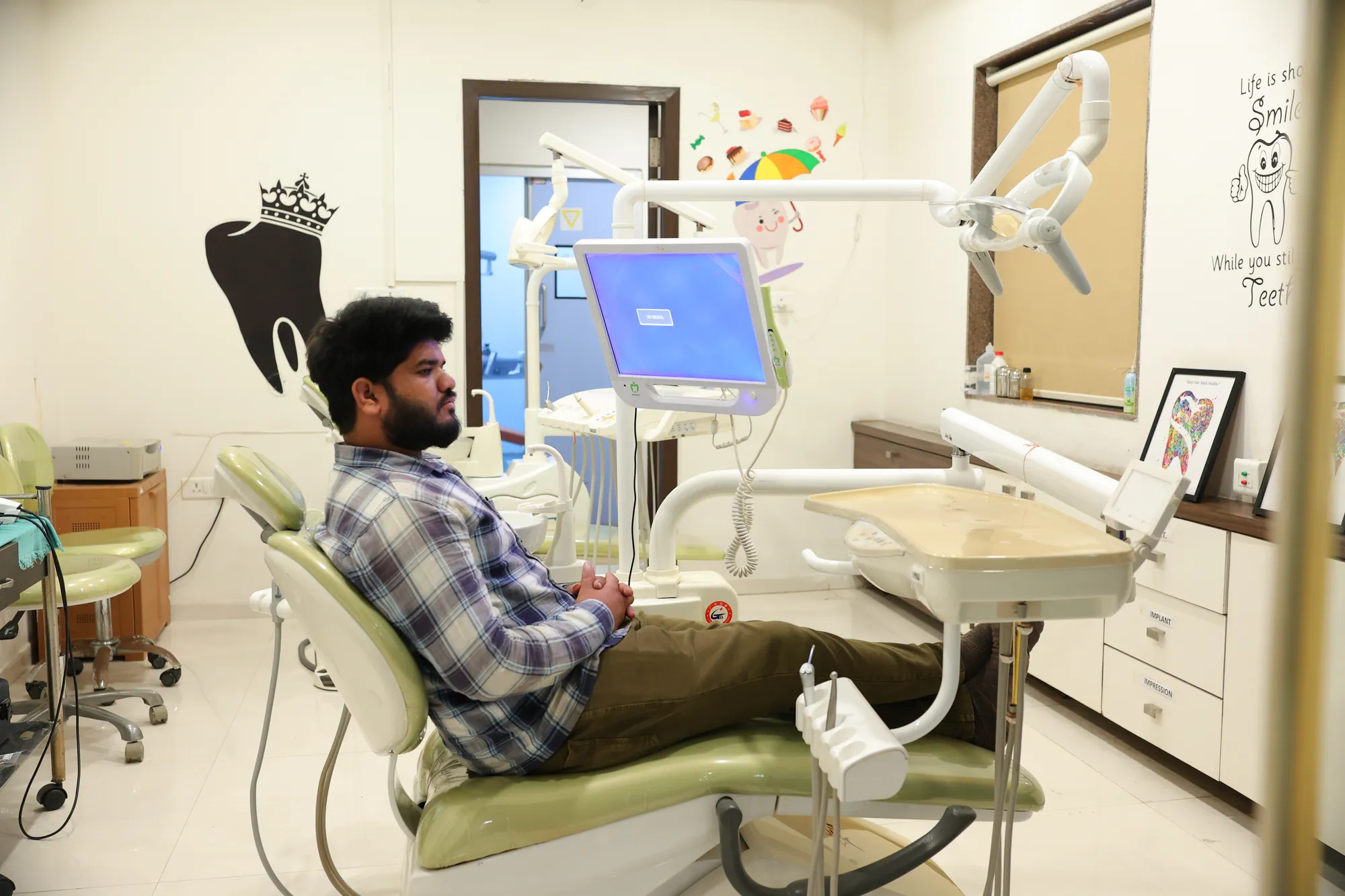
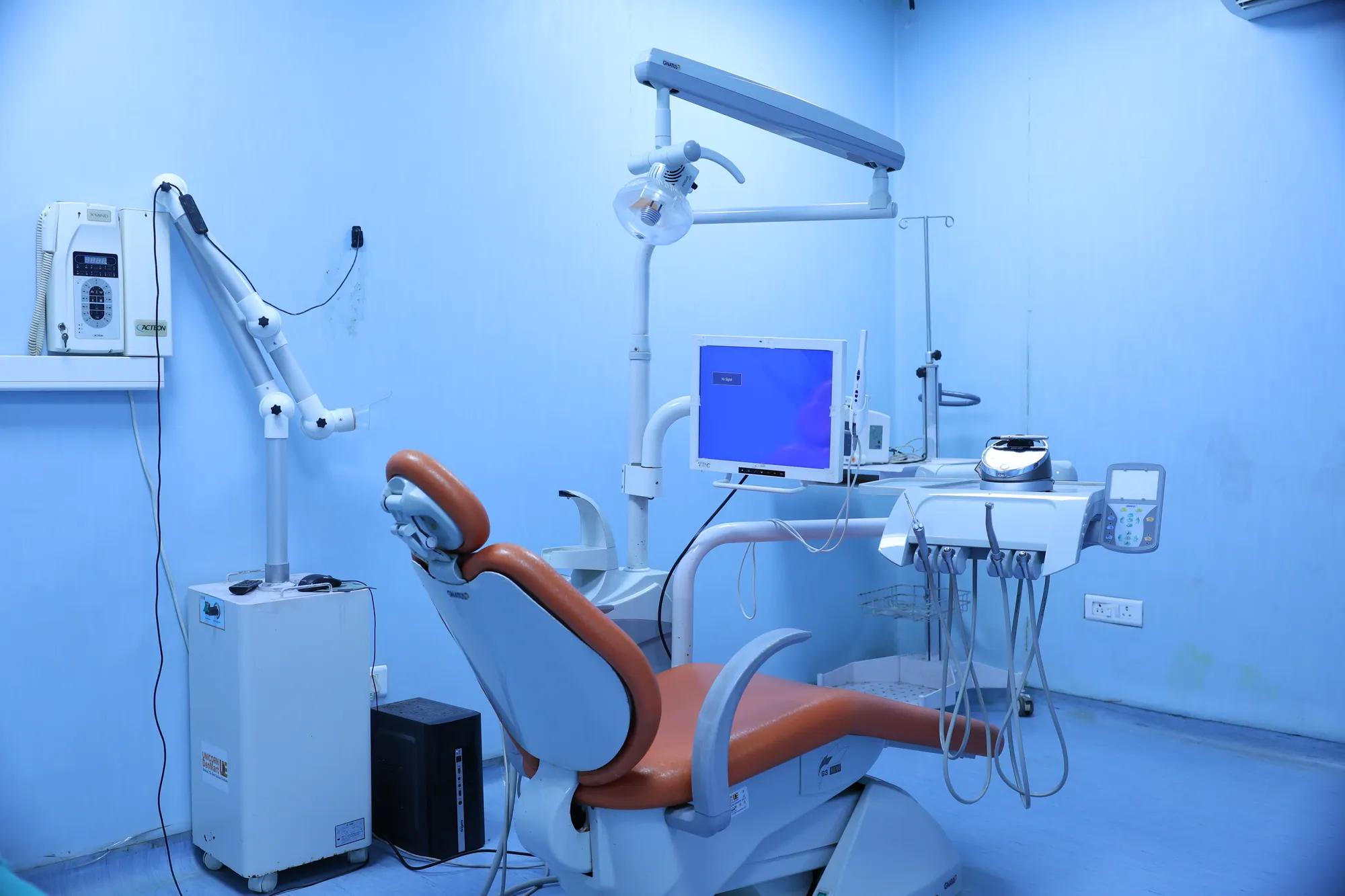
Oral and maxillofacial care concerns the mouth, teeth, jaws and related facial structures. A consultation may involve a toothache, a difficult extraction, a missing tooth, a jaw concern, an oral lesion or an injury. The examination helps distinguish what is happening and whether general dentistry, oral surgery, imaging or another medical service is the appropriate next step. The terms on a fee chart do not determine suitability: the clinician needs to examine the person, review medical history and explain a plan before treatment.
Krishna Hospital’s supplied Dental Treatment Chart lists outpatient consultation, scaling, extraction, surgical extraction, impacted teeth, implants, restorations, root canal treatment, crowns, fracture care, cyst or tumour procedures and OPG imaging. This page explains those categories in general language and reproduces only amounts that are readable in the supplied image. It does not confirm that any specific procedure is right for a reader or provide a personal quote. Final choices and fees should be discussed with the treating dental or maxillofacial clinician.
What an oral and maxillofacial consultation covers
The mouth and jaw support eating, speech and facial movement, so a problem can affect comfort and ordinary activities. A clinician may ask about pain, swelling, bleeding, difficulty opening the mouth, a broken tooth, a missing tooth or a change in the lining of the mouth. They may review previous dental work, medicines, allergies, health conditions and any history of injury. An oral examination and, when needed, imaging help the clinician understand the problem. The visit does not commit you to a procedure; it is a chance to understand the findings and discuss options.
Some concerns can be treated with routine dental care, while others need a surgical opinion or additional imaging. The chart includes both everyday dental items and more complex entries such as impacted teeth, fracture treatment and cyst or tumour surgery. These examples do not mean every service is suitable for every patient, and a chart label may not explain the exact method. Ask the clinician to write down the proposed treatment and describe why it is recommended, what alternatives exist, and what outcome is realistic for your case.
Common concerns and what to tell the clinician
Tooth pain, sensitivity, bleeding gums, a broken tooth, facial swelling, difficulty chewing or a missing tooth are all reasons to ask whether an assessment is appropriate. Jaw discomfort, reduced mouth opening, a lump, persistent ulcer or recent facial injury should also be described clearly. Symptoms can have different causes, so an online page cannot identify the condition. Tell the clinician where the problem is, when it began, whether it is changing, what makes it better or worse, and whether you have had treatment already.
Facial swelling with fever, difficulty breathing or swallowing, uncontrolled bleeding, a serious injury, or rapidly worsening pain needs prompt medical attention. Do not wait for a routine dental booking in those situations. For a broken or knocked-out tooth, contact a dental professional as soon as possible for case-specific guidance. Do not take another person’s medicine or place chemicals or home remedies on the affected area. If you have a medical condition or take blood-thinning medicine, share that before any procedure is planned.
Examination, imaging and treatment planning
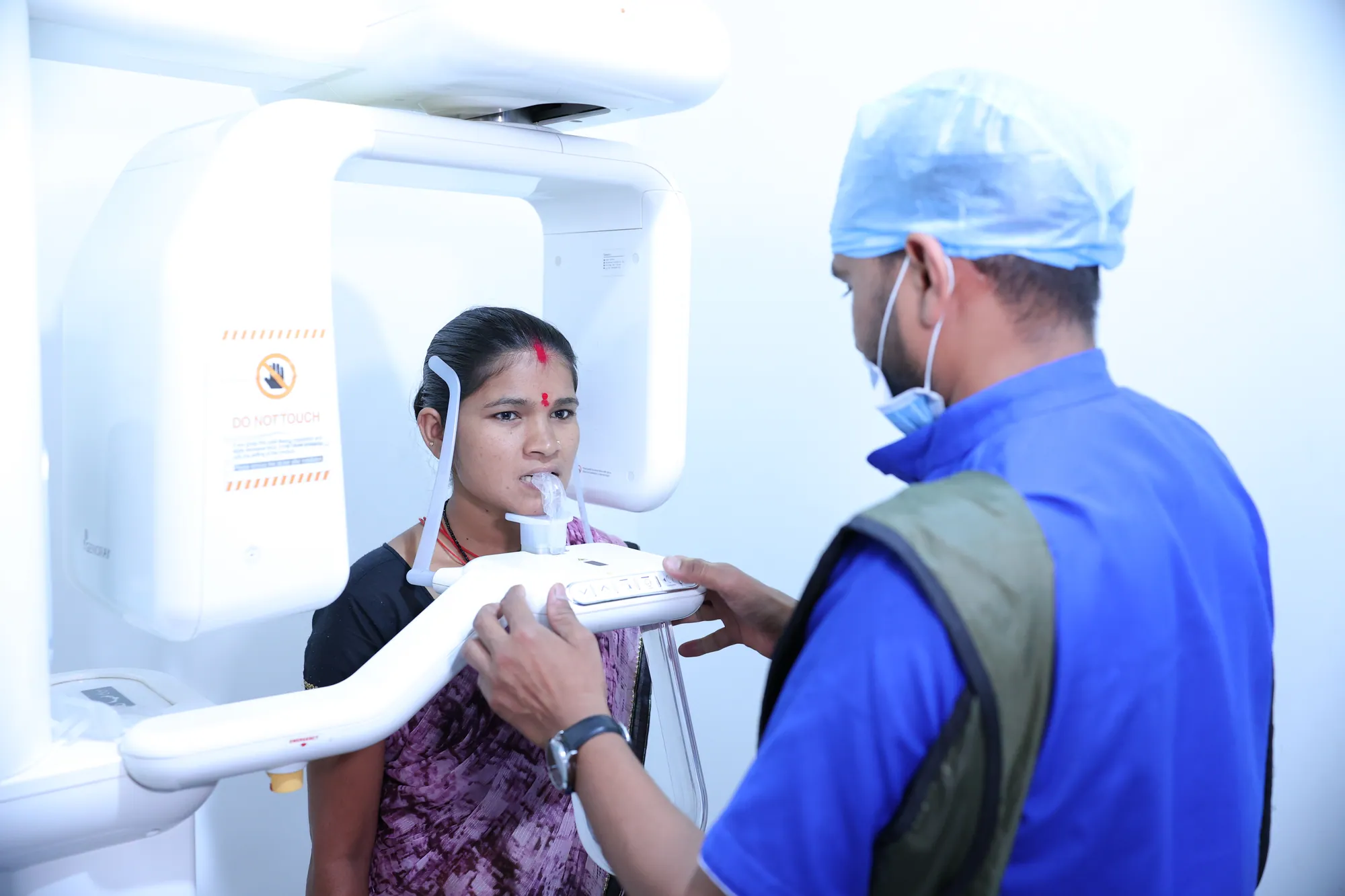
The clinician may inspect the teeth, gums, bite and mouth and ask you to open and close the jaw. The examination can identify areas that need closer assessment. An OPG X-ray may be advised for certain questions about teeth or jaw structures, but it is not required for every consultation. The chart lists an OPG amount; it does not state whether the image is included in another service. Ask what the image is intended to show, whether it is needed now and who will explain the result.
Planning also considers the person’s age, health history, medicines, allergies, previous dental work and ability to attend follow-up. For a procedure under local or general anaesthesia, the team may ask for additional information and provide separate preparation instructions. Ask who will carry out the procedure, where it will occur, how pain control is planned, what aftercare is expected and how to contact the team with a concern. A careful explanation is part of treatment planning; you should have time to ask questions before giving consent.
Understanding the dental services on the chart
The chart lists scaling, extraction, surgical extraction, impacted-tooth care, fillings using GIC or composite, root canal treatment, laser RCT, crowns, implants, complete or partial denture abbreviations, and OPG imaging. In general, these labels refer to different ways a dental team may assess or manage teeth and supporting structures. The exact technique and materials are selected only after an examination. A crown material or implant price alone does not show the condition of the tooth, the suitability of the jaw or whether additional steps are required.
Ask the clinician to explain the tooth or area involved, why the proposed option is preferred, what alternatives might be reasonable and what could happen if treatment is postponed. If a tooth may need a root canal, filling, crown or extraction, the decision depends on the clinical findings; a web guide cannot select between them. For a missing tooth, the consultation may discuss an implant or another replacement option, but suitability depends on examination and treatment planning. Request the exact material and number of visits before comparing estimates.
Jaw, facial injury and oral surgery discussions
Oral and maxillofacial surgery may be discussed for selected impacted teeth, facial or jaw injuries, cysts, lesions or other concerns. The chart includes entries for fracture care under local and general anaesthesia and cyst or tumour procedures. Those headings do not explain the diagnosis, the complexity of a particular injury or the full surgical plan. A clinician may need examination and imaging, and may coordinate with other professionals. A suspected tumour or cyst needs an individual assessment; the printed amount is not a substitute for the diagnostic process.
When injury is involved, the priority is prompt medical assessment and stabilising urgent needs. Bring any previous X-rays, injury notes and a list of medicines. For a planned procedure, ask what the diagnosis is, why surgery is being considered, what anaesthesia is expected, how long recovery may take and whether follow-up imaging is likely. If the hospital recommends transfer or specialist referral, ask who will coordinate it. Seek emergency help for trouble breathing or swallowing, heavy bleeding, loss of consciousness, a severe facial injury or rapidly worsening swelling.
How to use the supplied price list
The prices shown on this page are transcribed from the photograph provided by the hospital contact. The chart lists OPD at ₹300, scaling at ₹1,200 per sitting, extraction at ₹1,000, surgical extraction at ₹1,500–₹2,500 per sitting, impacted tooth at ₹4,500–₹8,000 and implant at ₹18,000–₹30,000 per implant. It lists different fillings, root canal services, crowns, laser items, fracture care, cyst or tumour procedures, RPD and OPG X-ray. The abbreviation “CD” is preserved rather than expanded because the photo does not clarify it.
Amounts are indicative and may not include consultation, imaging, materials, anaesthesia, medicines or follow-up. Some entries are ranges or use units printed on the chart; do not infer a per-tooth or per-visit amount when the chart does not say so. Ask for a written estimate with the exact tooth or procedure, material, number of visits and any additional charges. If a price or abbreviation is unclear, request an explanation from the hospital before booking. Rates may change, and a current estimate takes precedence over a photograph.
Preparing for your appointment
Bring previous dental records, X-rays, treatment notes, a list of medicines, allergies and relevant health conditions. If the concern followed an injury, bring any emergency notes or imaging. Write down your main questions and mention if you have trouble opening your mouth, swallowing or chewing. Tell the clinician about pregnancy, a bleeding condition, diabetes or a previous reaction to anaesthesia when relevant. This information helps the team plan safely; it should not be withheld because it feels unrelated.
Before a procedure, follow only the preparation instructions from your own treating team. Do not stop prescribed medicines, fast or arrange anaesthesia based on a generic web page. Confirm whether you need to bring someone, how long to stay and what aftercare supplies are required. Ask how pain will be managed, what foods or activities might be limited and when the next review takes place. If a procedure is postponed or symptoms change, contact the hospital rather than trying to adjust the plan yourself.
Aftercare and questions to ask
Aftercare depends on the dental or surgical procedure. The team may give instructions for cleaning, eating, oral hygiene, medicines and follow-up. Use medicines exactly as prescribed and contact the clinician if pain is not controlled or an instruction is unclear. Increasing swelling, fever, uncontrolled bleeding, difficulty swallowing or breathing, a severe reaction or worsening symptoms needs prompt medical attention. If you have questions once home, use the contact route provided by the hospital rather than relying on a general website.
Before consent, ask: What did the examination show? What is the exact name of the procedure? Is imaging needed? What alternatives are available? Which material is planned? What does the estimate include? Is anaesthesia separate? How many visits are expected? What is normal after treatment and what is a warning sign? Can I receive the treatment plan and fee estimate in writing? A clear discussion helps you make a decision that fits the clinical findings, budget and personal priorities.
Understanding abbreviations and materials
Dental charts often use short labels to fit a printed page. In the photograph, “RCT,” “GIC,” “RPD,” “LA” and “GA” appear as abbreviations. RCT is commonly used for root canal treatment; LA and GA refer to local and general anaesthesia. The chart does not expand every term or define every material, so the hospital should confirm the intended meaning before a patient relies on an entry. “CD” is left as printed because the image does not clearly identify what the abbreviation means in this clinic’s price list.
Materials such as composite, metal ceramic or zirconia can differ in appearance, use and cost. The name alone does not reveal whether a material suits a particular tooth or bite. Ask the clinician to describe the options, expected durability, repair considerations and any additional laboratory charge. For an implant, confirm whether the printed amount refers to the implant component only or includes other parts and stages. A written plan should name the tooth, material, number of visits and what is included so that the price can be understood accurately.
Planning for accessibility and follow-up
If pain, jaw movement or facial swelling makes travel difficult, tell the hospital when requesting an appointment. Ask whether a support person can accompany you and whether the clinic needs any reports in advance. Patients who communicate in Hindi or another language should ask for explanations in the language they understand best. Bring glasses, hearing aids or mobility supports if you use them. These practical details help staff plan a more comfortable visit but do not replace urgent care when breathing, swallowing or severe injury is involved.
Some treatments take more than one visit. Before starting, confirm the order of visits, expected time between stages, review schedule and whom to call if a temporary filling, crown or appliance causes discomfort. Keep receipts and written estimates with the treatment plan. If a fee changes, ask what has changed in the clinical plan or materials. A patient can ask for clarification or another opinion where time allows. Good care includes clear explanations, respectful communication and follow-up that fits the individual’s needs.