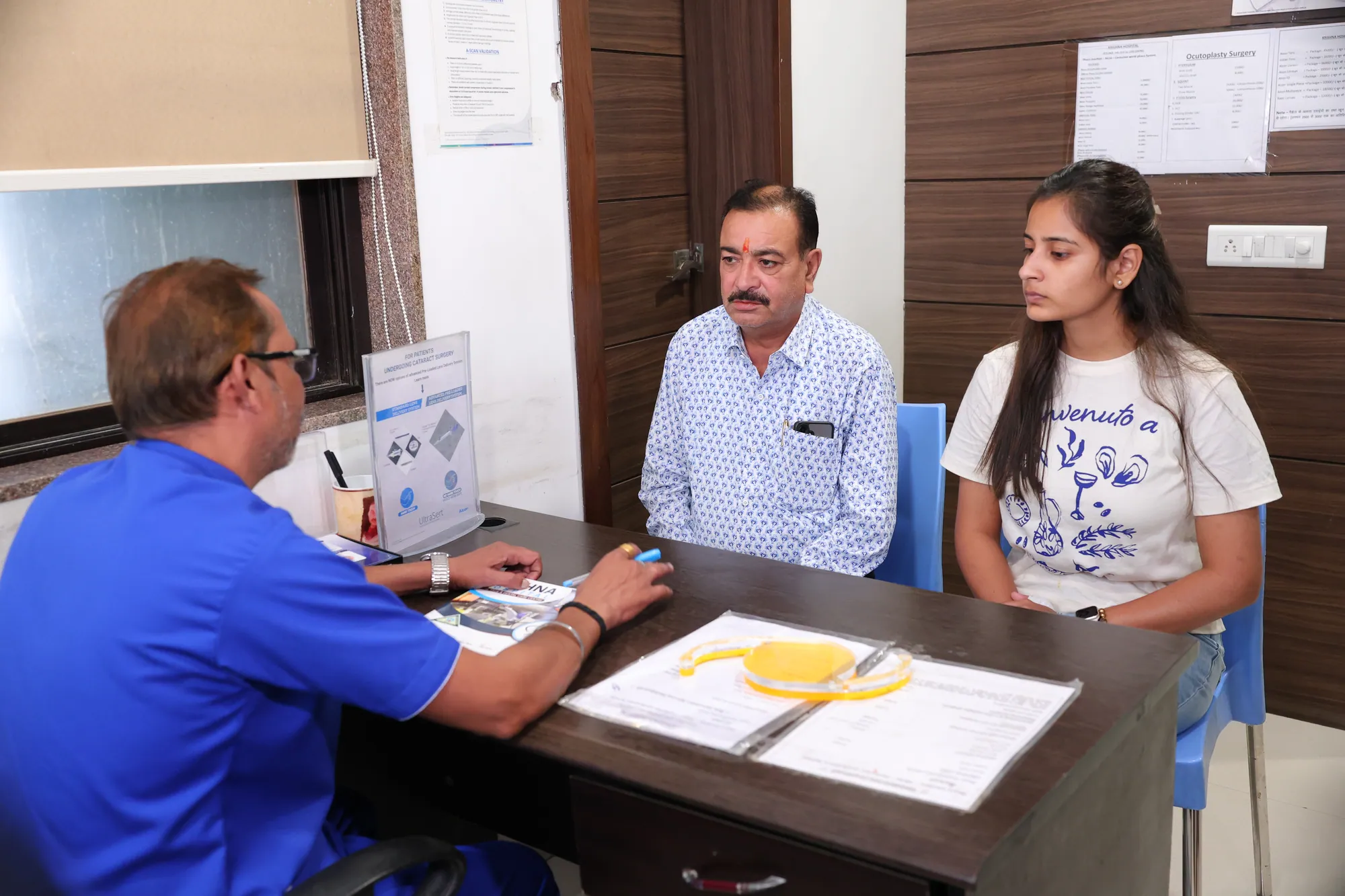
Surgical retina care is the evaluation of retinal problems for which an operation may be considered. The retina is the light-sensitive tissue at the back of the eye. A change there can affect central detail, side vision or both. An examination may lead to monitoring, a medical-retina plan, urgent treatment, a surgical discussion or referral to another centre. The word “surgical” does not mean that every patient needs surgery. The clinician first identifies the concern, explains the options and confirms which services can be provided for that person.
This page is an educational guide to preparing for a surgical-retina consultation at Krishna Hospital in Sagar. It does not promise that a particular operation is available, suitable or necessary. The hospital must confirm the scope of local care and any referral arrangements after reviewing the clinical details. The supplied price charts do not list a surgical-retina operation rate; no such amount is invented here. Ask for a written estimate for any recommended procedure, including the location, surgeon, anaesthesia, medicines, tests and follow-up that are included.
What a surgical-retina assessment is for
Some retinal findings can threaten sight or interfere with the view inside the eye. A surgeon may be asked to assess a retinal tear, detachment, bleeding, traction or another problem identified by an ophthalmologist. These examples are general and do not diagnose an individual reader. The appropriate plan depends on the examination, imaging, how quickly the change occurred, the other eye, previous operations and general health. In some cases the clinician may recommend observation or another treatment rather than surgery.
Surgical retina planning is highly individual. The team may need to understand the exact location and extent of a change, whether the macula is involved, and whether other eye conditions affect the plan. An appointment may include a dilated examination and imaging. If the view is limited or the first test does not answer the clinical question, the clinician may discuss additional assessment. A referral to another specialist or facility may be appropriate; ask who is responsible for coordinating it and how soon it should happen.
Symptoms that need urgent attention
A sudden shower of floaters, flashes of light, a new curtain or shadow across the field of vision, or sudden loss of sight can be a warning sign of a retinal tear or detachment. Seek urgent eye assessment the same day where possible; do not wait for a routine appointment, drive yourself if your vision is impaired, or rely on an online form. New symptoms after an eye procedure or injury also need prompt advice. If Krishna Hospital cannot be reached, seek the nearest emergency eye service or emergency department.
Other problems can also cause floaters, flashes or blur, so a symptom does not identify a diagnosis. What matters is the timing and change. Tell the clinician which eye is affected, when it began, whether it is getting worse and whether there was an injury or previous procedure. Severe eye pain, chemical exposure, a penetrating injury or sudden major vision change is an emergency. This information is not a substitute for triage. When in doubt about a sudden or severe change, choose prompt in-person care.
How the team evaluates the retina
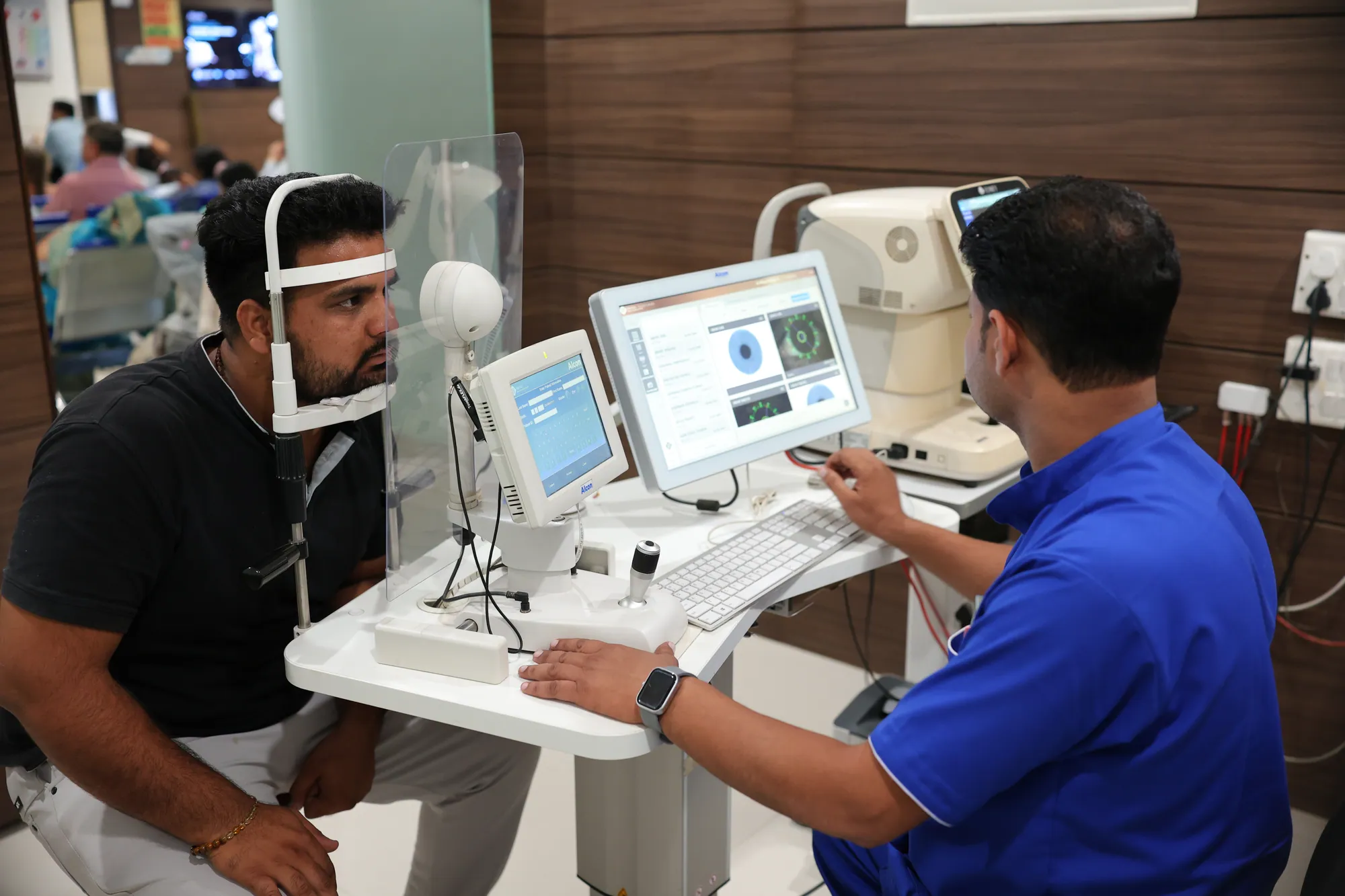
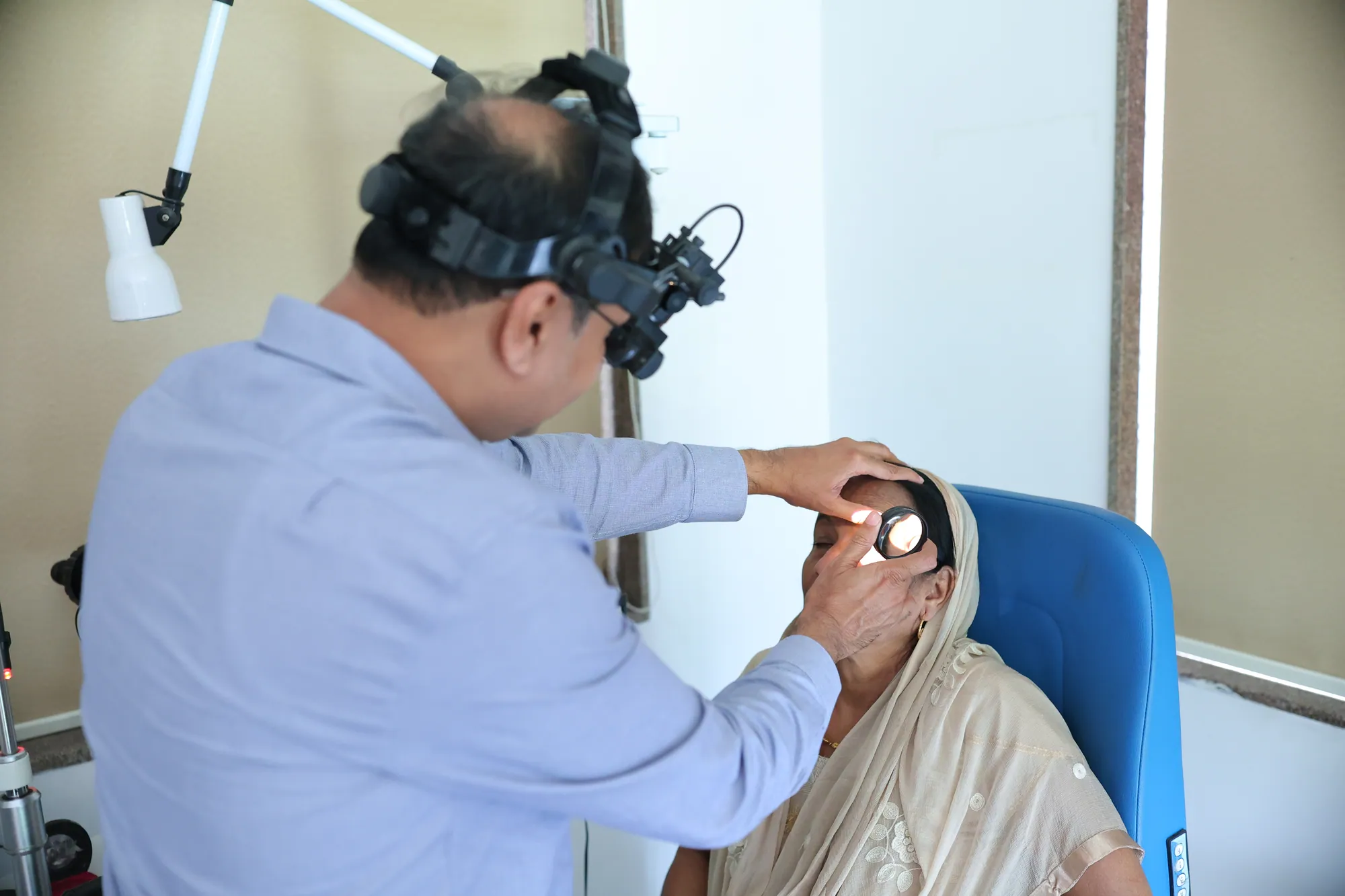
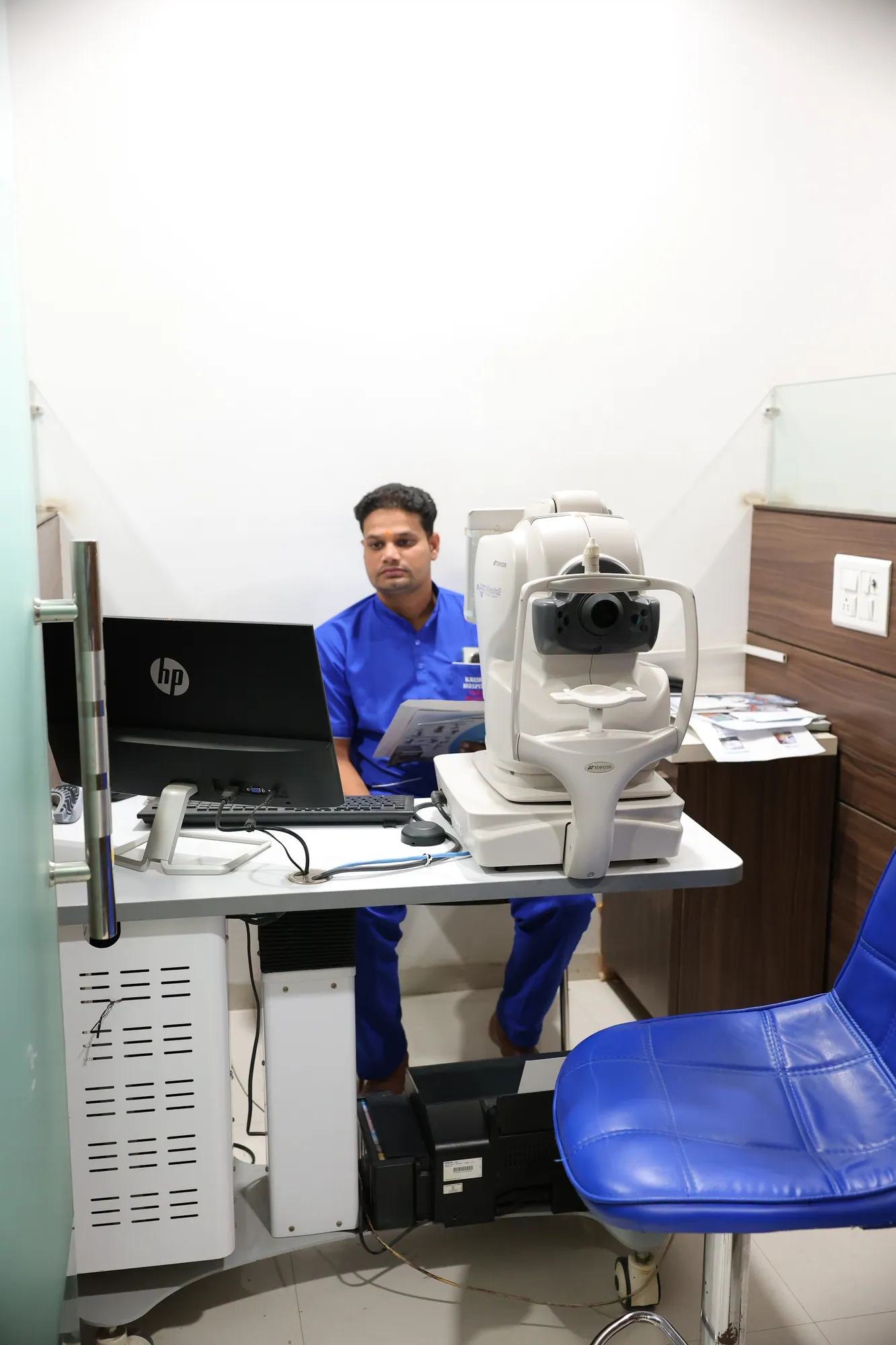
The consultation may begin with a review of symptoms, earlier diagnoses, eye surgery, medicines and medical conditions. Visual acuity and a dilated examination can help the clinician assess the eye. Imaging such as OCT or fundus photography may be used where indicated; the supplied chart also lists these investigations. The exact test depends on what needs to be understood. A photograph, scan or outside report can be helpful, but the treating specialist interprets it together with the examination.
Bring any previous images in their original format if possible, along with reports and operation notes. Do not rely only on a phone photograph of a report if the original is available. Ask what the test is intended to show, whether dilation is planned and when the doctor will review the result. If the problem is urgent, the clinical team may prioritise an examination over routine paperwork. A test appearing in the price guide does not mean it is required for every person, and its cost may not include consultation or further care.
How a surgery discussion should work
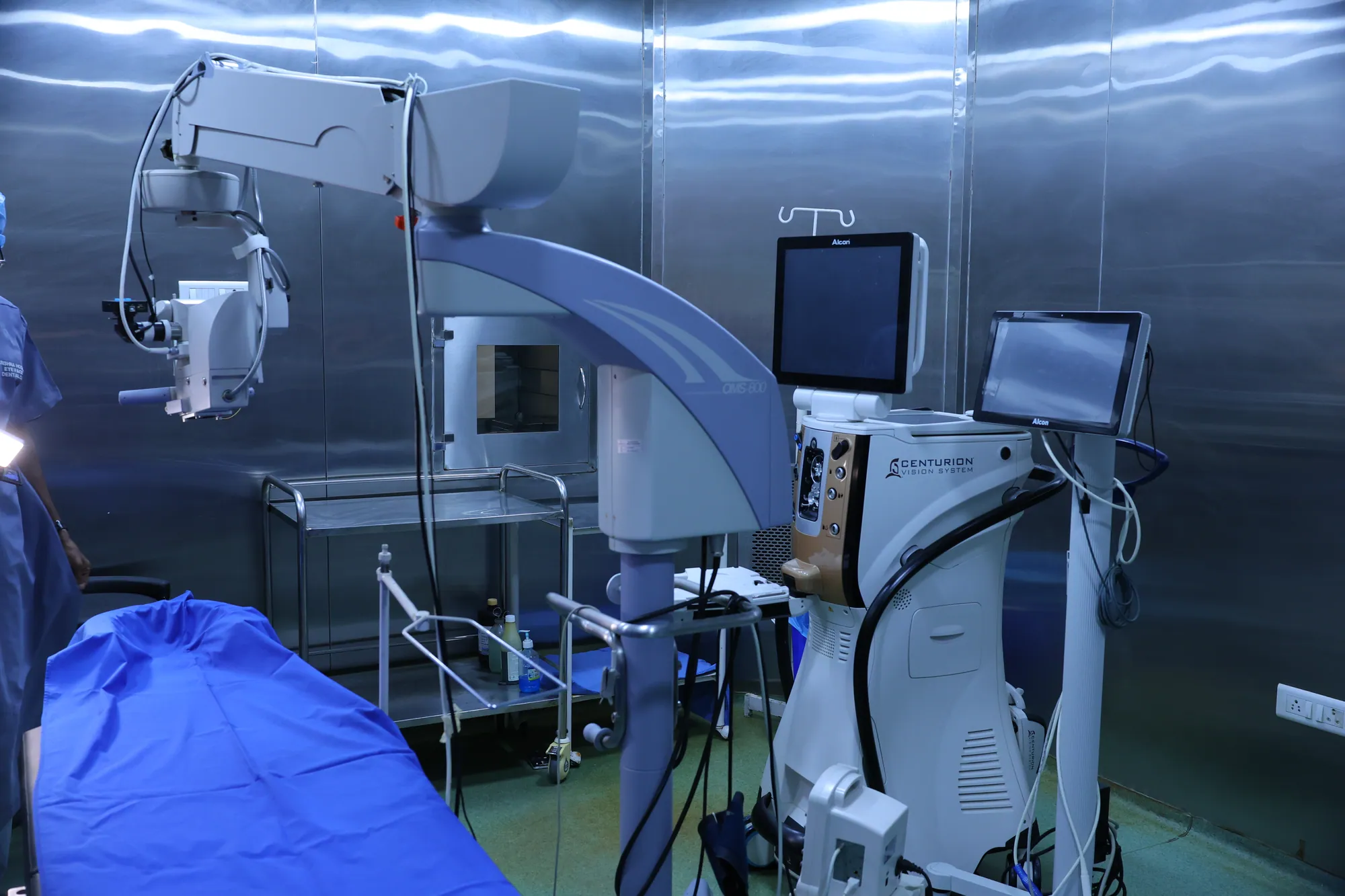
If an operation is considered, ask the surgeon to explain the diagnosis in plain language, the purpose of the procedure and how quickly a decision is needed. The conversation should include expected benefit, limitations, material risks, alternatives and what may happen if treatment is delayed. Some retinal operations are performed in a hospital operating theatre and need specific equipment, anaesthesia and follow-up. The exact procedure depends on the eye; this page does not list or promise a particular technique at Krishna Hospital.
Ask whether the recommended operation will be performed at the hospital or whether a referral is needed. Confirm the surgeon’s name, place of treatment, appointment timing, anaesthesia plan, estimated cost and aftercare contact before travel. If more than one option is reasonable, ask how they differ for your eye. You may request time to think, bring a family member or ask for a second opinion where the situation allows. For an emergency, the clinician will explain why prompt action is advised and what the immediate plan is.
Preparing for an operation or referral
Preparation instructions come from the treating team and depend on the procedure and the person’s health. Bring a complete medication list, allergies, medical records, prior eye reports and contact information for other clinicians. Do not stop blood thinners, diabetes treatment or other prescribed medicines unless the surgeon or anaesthesia team specifically instructs you. If fasting is needed, the team should give the timing and clarify which regular medicines to take. Ask whether you need a companion and whether you can travel home safely after the visit or procedure.
Before leaving a consultation, confirm the next appointment, whom to call with a change, which records need to be sent and whether the referral is urgent. Ask for instructions in writing. If surgery is recommended, clarify how long you may need support at home, when you can resume activities and which symptoms need immediate attention. Do not make assumptions from a friend’s previous operation; procedures and recovery plans vary. A well-prepared visit helps the team use the appointment effectively but cannot remove the risks associated with eye disease or surgery.
Recovery and long-term follow-up
Recovery is different for each person and depends on the retinal condition, operation, eye health and general health. The surgeon will prescribe any drops or medicines and explain how to use them. Follow the positioning, activity, eye-protection and review instructions you receive; these can be specific to a procedure. Do not stop treatment when the eye feels better without checking with the clinician. Keep all follow-up visits, even if vision is improving, because the surgeon needs to assess healing and decide whether additional care is needed.
Seek prompt medical advice for sudden loss of vision, severe pain, increasing redness, new flashes or a curtain-like shadow, significant discharge or a problem with a prescribed medicine. These symptoms do not prove a complication, but they should not be ignored. Ask before travel, strenuous activity or returning to work if restrictions are unclear. If a referral has been made, confirm who will arrange the next visit and how results return to the original team. A written record of the operation and follow-up plan supports continuity of care.
Costs and the information available here
The supplied chart does not include a clearly labelled retinal surgery rate. If a surgical-retina procedure is recommended, request a current written estimate from the hospital or referral centre. Ask whether the amount is per eye and whether it includes surgeon, theatre, anaesthesia, medicines, imaging and postoperative reviews.
Costs can depend on the diagnosis, urgency, method, materials and location of treatment. A quote should match the plan explained to you. Ask the team which charges could change and how to contact them if your symptoms worsen before the scheduled date. The price guide is for transparency, not a clinical decision tool. Do not delay urgent assessment while comparing prices online. Your safety and the timing advised by the treating professional come first.
Questions for the retinal surgeon
Useful questions include: What retinal problem did you find? How urgent is it? Which tests support the recommendation? Is observation or a non-surgical option reasonable? What operation, if any, are you recommending and where will it happen? What result is realistic in my eye? What are the important risks and limitations? What anaesthesia is planned? How long is recovery likely to take? Which follow-up visits are essential? Who do I call after hours if symptoms change? What does the written estimate include?
Ask for unfamiliar terms to be written down and explained. You may take notes or bring a trusted support person, while ensuring the patient has a chance to express their own preferences. If a recommendation is not clear, ask the clinician to explain it again before giving consent. If the situation is not urgent, a second opinion may help you feel confident; if the clinician says it is urgent, ask them to explain the reason and time sensitivity. The goal is an informed and safe plan, not a rushed decision based on a web page.
Continuity, mobility and support after a retinal procedure
Before travelling for a consultation or operation, confirm where you should report, how long the visit may take and whether a relative or caregiver should accompany you. If the patient has reduced vision, arrange transport that does not require them to drive. Ask the team whether the same clinician will provide follow-up or whether another eye-care professional can review the patient closer to home. The answer depends on the clinical plan. Keep the name and contact details of the treating team with your discharge instructions and reports.
Vision can remain limited while the eye heals or while another condition is assessed. Ask what activities are safe, whether work or travel should be postponed, and how to manage the eye during bathing or sleep. If you live far from Sagar, discuss the practical follow-up schedule before a procedure is booked. The surgeon may need to examine the eye at specific intervals; remote photographs are not always an adequate substitute. A support person can help remember the instructions, but the patient should be included in decisions whenever possible.
If another centre or specialist is recommended
A referral is not a rejection of care. It can be the safest way to connect a patient with the clinician, equipment or hospital setting suited to a particular retinal problem. Ask which service is being requested, how urgent the referral is, what records must travel with you and who will contact the receiving clinic. If the referral is time-sensitive, ask what to do if you do not receive an appointment promptly. Take previous images and operation notes rather than assuming that they will be transferred automatically.
Keep the original clinician informed about the outcome if the receiving centre agrees. Ask whether you should continue existing medicines and which warning symptoms need immediate attention while waiting. Do not delay emergency assessment to collect paperwork. Once a plan is agreed, clarify who is monitoring the next step and where the follow-up will occur. This coordination helps reduce gaps between appointments, especially when more than one professional is involved. The correct pathway is determined by clinicians after examination, not by the wording of a website page.